
Highlighting Scalable Statistical Innovations at SIAM PP26
Our research team recently made a strong showing at the SIAM Conference on Parallel Processing for Scientific Computing (PP26), driving important conversations around data-driven modeling and high-performance statistical analysis.
About
Leading the Conversation on Scalable Methods
Dr. Lisa Gaedke-Merzhäuser, alongside Dr. Sameh Abdullah (AMCS), co-organized a featured minisymposium titled "Scalable Statistical Methods for Large-Scale Data Analysis." The multi-session event brought together experts at the intersection of statistics, uncertainty quantification, data science, and parallel computing. The symposium explored recent algorithmic innovations and the practical challenges of leveraging modern hardware to perform robust inference on massive datasets.
Advancing Bayesian Inference
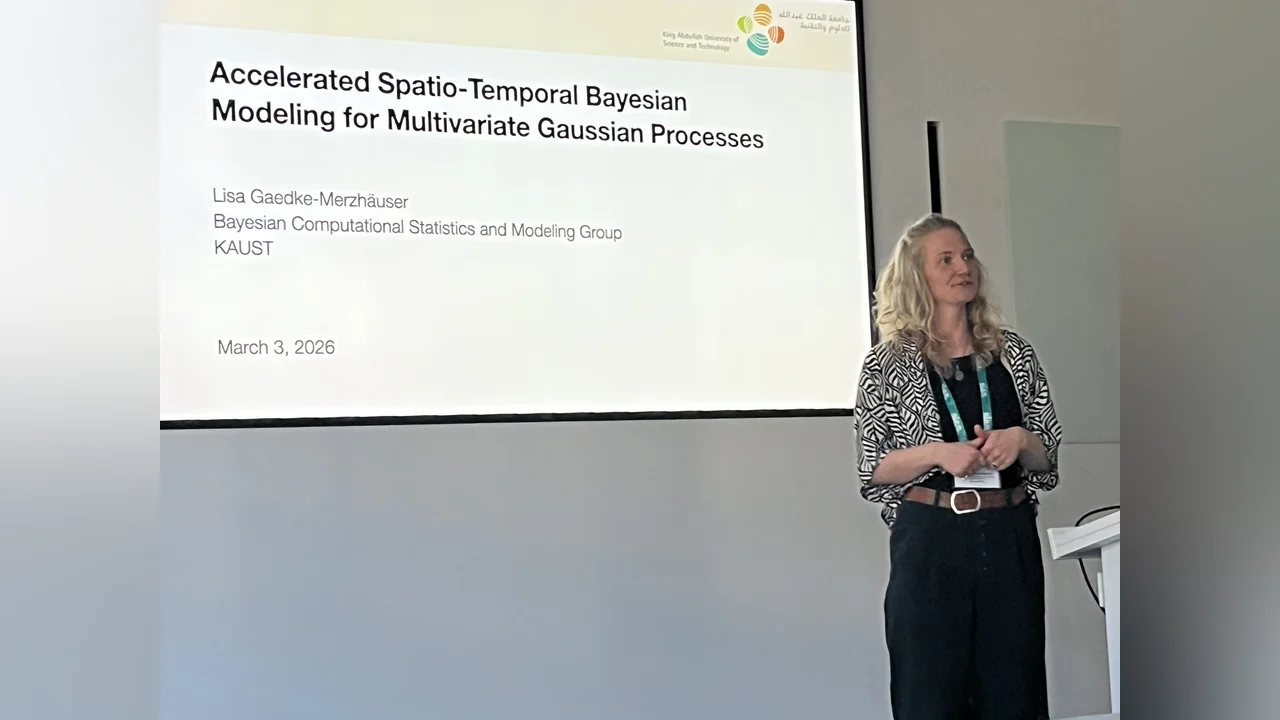
In addition to spearheading the sessions, Dr. Gaedke-Merzhäuser also delivered a featured talk on her latest research entitled "Large-scale Bayesian modeling for multivariate spatio-temporal Gaussian Processes." During her talk, she introduced DALIA, a novel Bayesian inference framework built on the INLA methodology. Highlighting its multiprocessing and GPU-acceleration capabilities, she demonstrated the framework's practical utility by applying it to spatial downscaling in an air pollution study over northern Italy.
More Scalable Numerical Algorithms
Rounding out the group's contributions, Dr. Esmail Abdul Fattah delivered an online presentation introducing sTiles, a powerful new GPU-accelerated framework for the sparse factorization of structured matrices. Addressing critical computational bottlenecks in scientific and engineering fields, sTiles is designed to efficiently handle challenging arrowhead sparse matrices with variable bandwidths. Dr. Esmail detailed how the framework leverages tile algorithms and a customized left-looking Cholesky variant to maximize parallelism and minimize memory usage on shared-memory systems. He also highlighted the framework's impressive real-world performance, showcasing speedups of up to 11x compared to standard industry solvers like PARDISO and MUMPS on modern hybrid architectures.
Related People
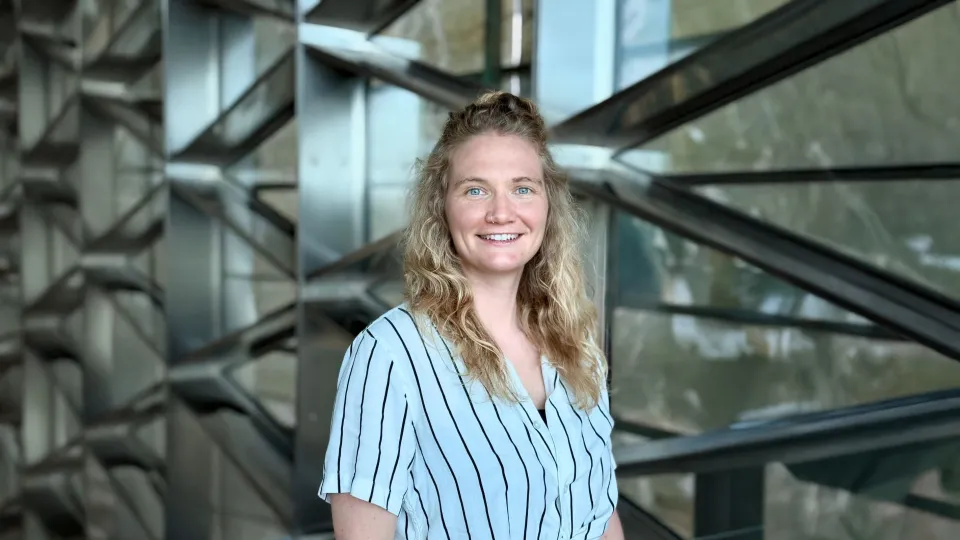
Lisa Gaedke-Merzhäuser
- Postdoctoral Research Fellow, Statistics
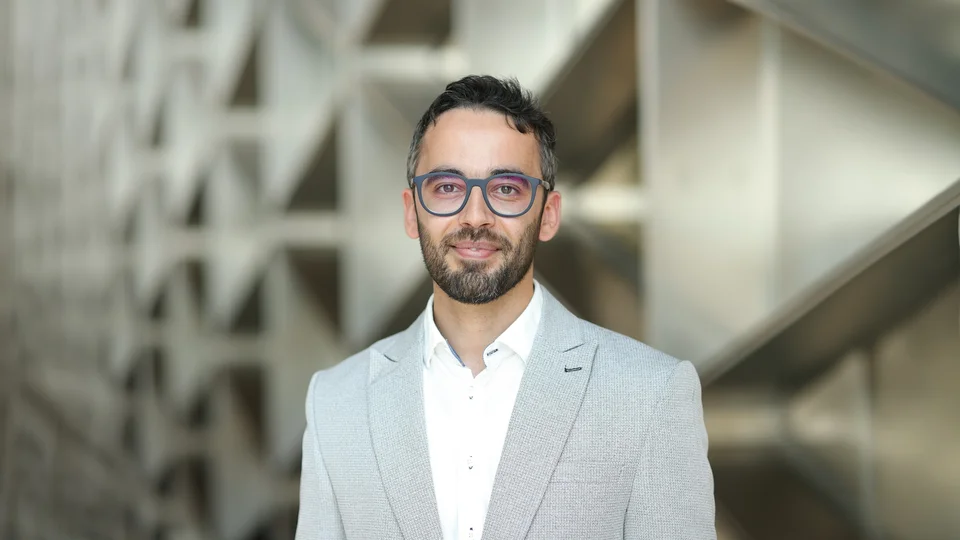
Esmail Abdul Fattah
- Postdoctoral Research Fellow, Statistics